


Page 22 - Patrika 43-Jan-Mar-26-May-19-curve-file.cdr
P. 22
and baseows, particularly in glacial lake inventory, publish-
the face of climate change and ing Glacial Lakes Atlases, and
growing pressure on utilizing decision-support
mountain ecosystems. platforms such as Bhuvan.
A strong focus was placed on
Overall, the session reinforced
strengthening monitoring
the need for stronger sci-
systems, including glacier
ence–policy integration,
observations, hydro-
improved data systems, and
meteorological networks, and
coordinated national action to
spring mapping initiatives.
address glacier loss and
These efforts are essential for
associated risks.
generating reliable data to
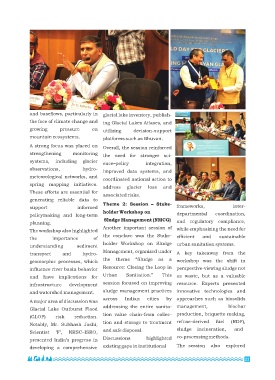
Theme 2: Session – Stake-
support informed frameworks, inter-
holder Workshop on
policymaking and long-term departmental coordination,
Sludge Management (NMCG) and regulatory compliance,
planning.
Another important session of while emphasizing the need for
The workshop also highlighted
the conclave was the Stake- efcient and sustainable
the importance of
holder Workshop on Sludge urban sanitation systems.
understanding sediment
Management, organized under
transport and hydro- A key takeaway from the
the theme “Sludge as a
geomorphic processes, which workshop was the shift in
Resource: Closing the Loop in
inuence river basin behavior perspective-viewing sludge not
and have implications for Urban Sanitation.” This as waste, but as a valuable
infrastructure development session focused on improving resource. Experts presented
and watershed management. sludge management practices innovative technologies and
across Indian cities by approaches such as biosolids
A major area of discussion was
addressing the entire sanita- management, biochar
Glacial Lake Outburst Flood
tion value chain-from collec- production, briquette making,
(GLOF) risk reduction.
tion and storage to treatment refuse-derived fuel (RDF),
Notably, Mr. Subhash Joshi,
and safe disposal. sludge incineration, and
Scientist ‘F’, NRSC–ISRO,
presented India’s progress in Discussions highlighted co-processing methods.
developing a comprehensive existing gaps in institutional The session also explored
22

